What Are Dense Breasts—and Why Do They Matter for Cancer Screening?
Badrinath Konety, M.D.
Chief Medical Officer
If you've recently been told you have dense breasts, you're not alone—and you may have questions. What does it mean? Should you be worried? Does it change how breast cancer is screened?
The good news is that having dense breasts is common. Understanding what breast density means can help you have informed conversations with your healthcare provider and make confident decisions about your breast health.
What Does It Mean to Have Dense Breasts?
Breast density describes how your breast tissue appears on a mammogram. It is not related to how your breasts feel or look. According to the Mayo Clinic, breast density reflects the proportion of fibrous and glandular tissue compared with fatty tissue seen on a mammogram.1
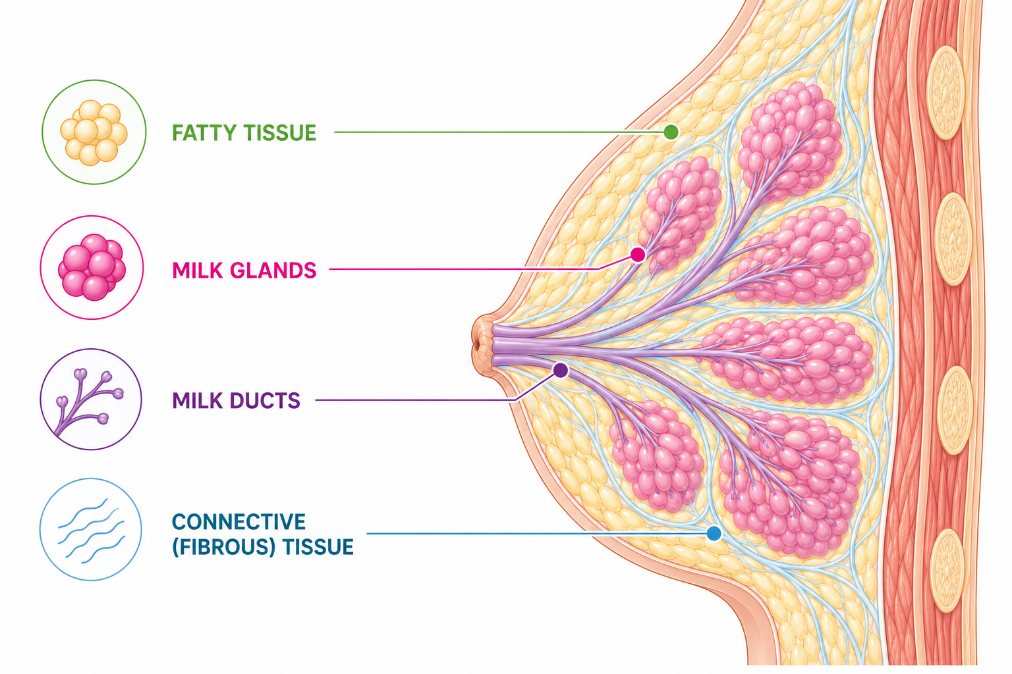
Breasts are made up of:
- Fatty tissue
- Milk glands
- Milk ducts
- Connective (fibrous) tissue
The glands, ducts, and connective tissue are considered dense tissue. The more dense tissue you have compared with fatty tissue, the denser your breasts are considered to be.
The American Cancer Society classifies breast density into four categories using the Breast Imaging Reporting and Data System (BI-RADS)2:
- BI-RADS A: Almost entirely fatty
- BI-RADS B: Scattered areas of fibroglandular density
- BI-RADS C: Heterogeneously dense
- BI-RADS D: Extremely dense
Women whose breasts are classified as heterogeneously dense or extremely dense (BI-RADS C and D) are considered to have dense breasts. According to the Centers for Disease Control, approximately half of women age 40 and older have dense breast tissue.3
Why Do Some Women Have Dense Breasts?
Breast density is normal and varies from person to person. According to the National Cancer Institute, several factors influence whether breasts are dense, including4:
- Age: Density often decreases after menopause, although many women continue to have dense breasts later in life.
- Genetics: Family history contributes to breast density.
- Hormones: Hormone replacement therapy may increase breast density in some women.
- Body composition: Women with lower body fat are more likely to have denser breast tissue.
Having dense breasts is not a disease, nor does it mean you have breast cancer. It is simply one characteristic of breast tissue that your healthcare provider considers when evaluating your overall breast health.
How Do You Know If You Have Dense Breasts?
You cannot determine breast density by touch, breast size, or a self-exam.
The only way to know whether you have dense breasts is through a mammogram, where a radiologist evaluates the images and assigns a breast density category.1
As of September 2024, the U.S. Food and Drug Administration (FDA) requires all mammography facilities to notify patients whether their breasts are considered dense.5 This national standard helps ensure women receive consistent information about how breast density may affect screening.
Common Misconceptions About Dense Breasts
Myth: Dense breasts mean you have breast cancer.
Fact: Most women with dense breasts do not have breast cancer.
According to the National Cancer Institute, breast density is one of several factors that may influence breast cancer risk, alongside age, genetics, family history, and lifestyle.4
Myth: You would know if your breasts are dense.
Fact: Breast density cannot be determined by how your breasts look or feel.
Only a mammogram can accurately determine breast density.1
Myth: Mammograms don't work if you have dense breasts.
Fact: Mammograms remain the foundation of breast cancer screening and continue to save lives.
However, because both dense breast tissue and many breast cancers appear white on a mammogram, dense tissue can make abnormalities more difficult to detect.4
Why Do Dense Breasts Matter for Cancer Screening?
Dense breasts matter for two important reasons.
Dense tissue can make cancer harder to detect.
Dense breast tissue can reduce the sensitivity of mammography by masking small cancers, making them more difficult to identify on imaging. DenseBreast-info.org explains that this "masking effect" is one reason some cancers may not be visible on a mammogram alone.
Dense breasts are associated with an increased risk of breast cancer.
In addition to making screening more challenging, dense breast tissue is itself an independent risk factor for breast cancer. Women with extremely dense breasts have a higher likelihood of developing breast cancer than women with predominantly fatty breasts, although breast density is only one component of an individual's overall risk assessment according to the American Cancer Society.2
What Should You Do If You Have Dense Breasts?
Learning that you have dense breasts isn't meant to alarm you—it's meant to help you make informed decisions about your care.
The next step is to have a conversation with your healthcare provider about your personal risk factors, family history, and whether your current screening plan is appropriate.
Depending on your individual circumstances, your provider may recommend:
- Continuing routine mammography
- Supplemental imaging, such as breast MRI or ultrasound
- Other options like a breast cancer blood test
Every woman's situation is unique, which is why personalized care is so important.
Footnotes
-
Dense breast tissue: What it means to have dense breasts - Mayo Clinic ↩ ↩2 ↩3
-
Dense Breast Tissue | Breast Density and Mammogram Reports | American Cancer Society ↩ ↩2
-
Dense Breasts: Answers to Commonly Asked Questions - NCI ↩ ↩2 ↩3
-
Important Information: Final Rule to Amend the Mammography Quality Standards Act (MQSA) | FDA ↩