What Women with Dense Breasts Need to Know About Breast Cancer Screening
Kaylee Kamalanathan, Ph.D.
If you’ve recently had a mammogram and noticed the words “dense breasts” in your report, you’re not alone—and you’re probably wondering what it means.
The National Cancer Institute indicates about 50% of women have dense breast tissue.1 Yet many women leave their mammogram appointments without fully understanding what breast density is, how it affects screening, or what questions they should ask next.
The good news? Dense breasts are common, and understanding your breast density can help you make more informed decisions about your health.
What Does “Dense Breasts” Mean?
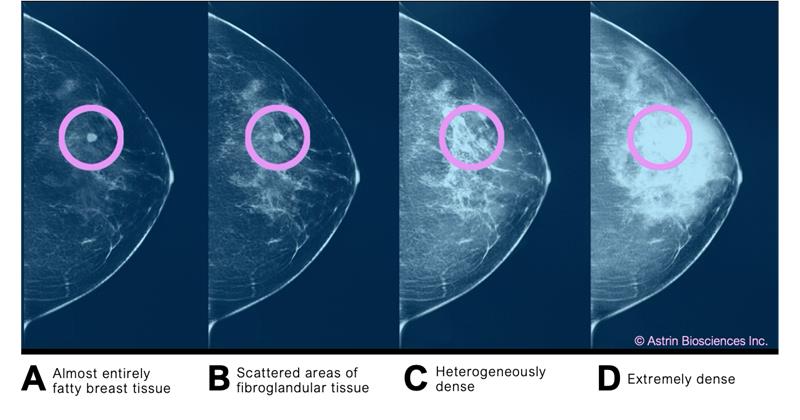
Breast density refers to the amount of tightly compact tissue, known as fibrous or glandular tissue, compared to fatty tissue in the breasts. Density is not related to breast size nor something you can feel during a self-exam. It can only be seen on a mammogram.
The American Cancer Society outlines the four categories of breast density2:
-
Mostly fatty breasts
These breasts contain more fatty tissue and less dense tissue. -
Scattered areas of density
There are some dense areas, but most of the breast tissue is non-dense. -
Heterogeneously dense breasts
Large portions of the breast tissue are dense. -
Extremely dense breasts
Most of the breast tissue is dense.
Women in categories C and D are considered to have “dense breasts.”
Why Does Breast Density Matter?
Dense breast tissue matters for two important reasons:
1. Dense tissue can make mammograms harder to read
Dense tissue appears white on a mammogram—and so can abnormalities, including some cancers. This can make it more difficult for radiologists to detect changes or suspicious areas per the American Cancer Society,3 adding another layer of complexity to routine screening for these women.
2. Dense breasts may be associated with an increased risk of breast cancer
Having dense breasts does not mean you will develop breast cancer. However, according to the National Cancer Institute women with dense breasts may have a higher likelihood of developing breast cancer compared to women with less dense tissue.4
That’s why understanding your personal breast density is an important part of knowing your overall breast health picture.
Who Has Dense Breasts?
According to the Mayo Clinic, breast density is common across many ages and backgrounds, but certain factors may make dense breasts more likely.5
Women who are more likely to have dense breasts may include:
-
Younger women
-
Women with lower body fat
-
Women taking hormone replacement therapy
-
Women with a family history of dense breasts
Breast density can also vary among racial and ethnic groups. Studies suggest that breast density patterns may differ based on genetics, age, and hormonal factors.
It’s also important to know that breast density can change over time. Many women experience changes in breast density as they age, especially after menopause.
How to Read Your Mammogram Report?
You cannot determine breast density on your own.
The only way to know your breast density is through your mammogram results.
After a mammogram, many women receive a report filled with unfamiliar medical language. One of the most important pieces of information in that report is your breast density which is now required to be included by the FDA.6
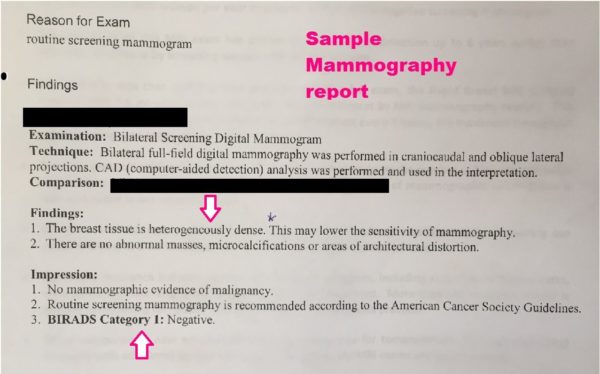
If you are unsure where to find this information, look for a section labeled “breast composition” or “breast density” in your mammogram summary or the text under “findings” or “impressions”. Many imaging centers also send a separate notification letter if dense tissue is identified.
Understanding your report is important because dense breast tissue can make mammograms harder to interpret. Dense tissue and abnormalities both appear white on imaging, which may make certain findings more difficult to detect.
Knowing your breast density can help you have more informed conversations with your doctor about your overall breast health and screening plan.
If you’ve never reviewed your mammogram report before, now is a good time to start. Check out resources like the Check Your Chart tool from My Density Matters.7 Review your last mammogram report to learn your breast density and talk with your doctor about your breast health and additional screening options.
Understanding Your Screening Options
Mammograms remain an important part of breast cancer screening and early detection.
For some women with dense breasts, additional screening tools like ultrasounds, MRI, or blood-based test, may be considered as part of a broader conversation with their healthcare provider.
These tools are not intended to replace routine screening, but they may help support next steps in care. Learn more about your screening options.
Take the Next Step – What Questions Should You Ask Your Doctor?
Whether your report mentions dense breasts or simply recommends routine follow-up care, understanding what to ask next can help you feel more informed and empowered.
Start by asking about your breast density. Knowing whether you have dense breast tissue is an important part of understanding your overall breast health picture.
Questions to consider asking your provider include:
-
What is my breast density?
-
Does my breast density affect my screening results?
-
How does my family history and personal history impact my risk?
-
Are there additional screening options I should consider? What are the benefits and drawbacks of these additional tests?
-
What symptoms or changes should I watch for?
-
In what timeframe should I schedule my next breast screening?
-
Are there other tools available to support care decisions?
Breast health is personal, and your care plan should reflect your individual risk factors, history, and preferences.
The most important thing is staying informed, maintaining regular screenings, and having open conversations with your healthcare provider about your options.
Knowledge should not create fear. It should create confidence.
Footnotes
-
Dense Breast Tissue | Breast Density and Mammogram Reports | American Cancer Society ↩
-
Limitations of Mammograms | How Accurate Are Mammograms? | American Cancer Society ↩
-
Dense breast tissue: What it means to have dense breasts - Mayo Clinic ↩
-
Important Information: Final Rule to Amend the Mammography Quality Standards Act (MQSA) | FDA ↩